Tonight I Can Write the Saddest Lines
Neruda's Heartbreak, Twice Translated
satNRag
6/24/20263 min read
Some lines of poetry travel so far from where they were written that they stop feeling foreign. A nineteen-year-old in Chile once sat down one night and wrote about a love that had ended, in a language and a landscape an ocean away from Kerala. A century later, a Malayalam poet read those lines, felt the same ache in his own chest, and gave them a second life in his mother tongue. That is the strange, quiet miracle of translation — and it's the story behind two versions of the same broken heart that I want to share today.
A Nineteen-Year-Old's Heartbreak That Became Immortal
In 1924, Pablo Neruda published Veinte poemas de amor y una canción desesperada (Twenty Love Poems and a Song of Despair) — a slim collection he wrote while barely out of his teens. It went on to become, by most accounts, the best-selling book of Spanish-language poetry of all time. Tucked near the end of that collection, as "Poem 20," sits the poem the world now knows by its opening line: "Tonight I can write the saddest lines."
It is a poem about the particular cruelty of an ordinary night. The speaker sits alone, watching the same blue, shivering stars he once watched with a woman he loved, and finds that the night itself has not changed even though everything between them has. He tries on certainty — "I no longer love her" — and the poem promptly undoes him: "but maybe I love her." That oscillation, between resolve and relapse, is the entire engine of the poem, and it's why it has stayed so universally devastating for a hundred years.
The English-speaking world largely came to know this poem through the American poet W.S. Merwin's 1969 translation, which carried Neruda's spare, almost conversational Spanish into equally plain English. A small taste of it:
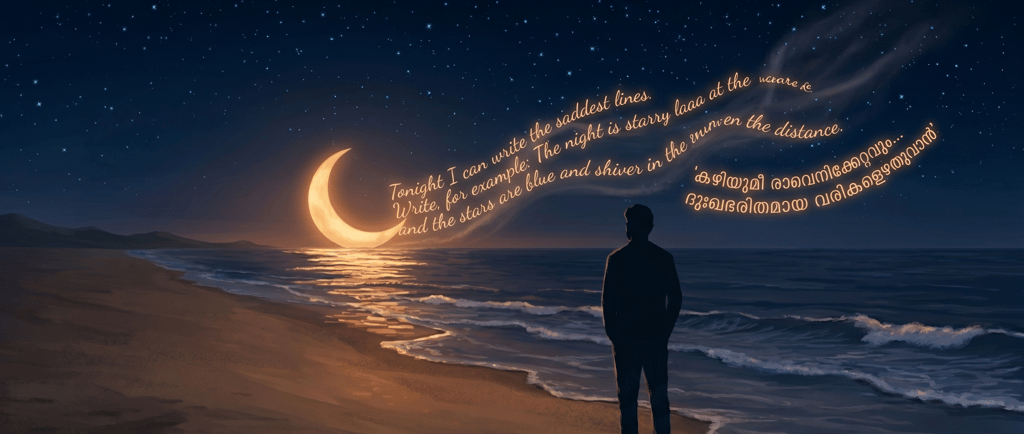
"Tonight I can write the saddest lines.
Write, for example: 'The night is starry
and the stars are blue and shiver in the distance.'
...I loved her, and sometimes she loved me too.
Through nights like this one I held her in my arms.
I kissed her again and again under the endless sky."
When Chullikkad Met Neruda
Decades later, on the other side of the world, the poet Balachandran Chullikkad — born in 1957 in Paravur, Kerala, and one of Malayalam poetry's most distinctive modern voices — translated this same poem into Malayalam under the title "ഏറ്റവും ദുഃഖഭരിതമായ വരികൾ" (Ettavum Dukhabharithamaya Varikal — "The Saddest Lines"). Chullikkad has translated several poets into Malayalam over the years — Neruda, Baudelaire, Tagore, Tennyson among them — but it is this particular translation that seems to have lodged itself most deeply into the Malayalam literary imagination, recited at gatherings and shared in poetry circles for years.
What's remarkable is how naturally Neruda's ache settles into Malayalam's own register of longing — a language that already has centuries of practice mourning love through monsoon nights and distant stars. Here is how Chullikkad opens it:
കഴിയുമീ രാവെനിക്കേറ്റവും ദുഃഖഭരിതമായ വരികളെഴുതുവാന്
ശിഥിലമായി രാത്രി നീല നക്ഷത്രങ്ങള് അകലെയായി വിറകൊള്ളുന്നു ഇങ്ങനെ…
അവളെ ഞാൻ പണ്ട് പ്രേമിച്ചിരുന്നു… എന്നെ അവളുമെപ്പോഴോ പ്രേമിച്ചിരുന്നിടാം…
ഇതുകണക്കെത്ര രാത്രികൾ നീളെ ഞാൻ അവളെ വാരിയെടുത്തിതെൻ കൈകളിൽ
അതിരെഴാത്ത ഗഗനത്തിനു കീഴിൽ അവളെ ഞാൻ ഉമ്മ വെച്ചൂ തെരുതെരെ…
And further along, the line that perhaps best captures why this poem refuses to age — Neruda's "we, of that time, are no longer the same" becomes, in Chullikkad's hands:
അന്നത്തെ നിശയും ആ വെണ്ണിലാവിൽ തിളങ്ങുന്ന മരനിരകളും മാറിയില്ലെങ്കിലും;
ഇനിയൊരിക്കലും നമ്മളന്നത്തെയാ പ്രണയിതാക്കളല്ല, എത്രമേൽ മാറി നാം…
Read the two side by side and you notice something: nothing essential gets lost in the crossing from Spanish to English to Malayalam. The stars are still blue. The night is still indifferent. The man still can't decide whether he's done loving her. Heartbreak, it turns out, doesn't need a passport.
Did You Know?
It made Neruda famous before he was twenty. Neruda wrote most of Twenty Love Poems and a Song of Despair in his late teens, and it remains, by many estimates, the best-selling poetry collection ever published in Spanish.
It found its way into Malayalam cinema too. The 2012 Malayalam film Shutter features a song, "Ee Rathriyil Njan Ezhuthunnu," written, composed, and sung by Shahabaz Aman — itself another, freer Malayalam rendering of this very Neruda poem, set to music.
It has been read aloud by Hollywood, too. Andy García recites lines from this poem in the 1994 film Il Postino (The Postman), one of the most well-known cinematic readings of Neruda's work.
Now, Listen
Reading a poem on a page and hearing it spoken aloud are two different experiences entirely — especially a poem built, in both Spanish and Malayalam, on rhythm, repetition, and the particular weight that falls on certain words when a voice carries them. Chullikkad's translation, in particular, is a poem written to be recited — its long, breath-driven lines ask for a voice, not just an eye scanning text.
I recorded my own recitation of this translation — and I'd love for you to listen to it and tell me what you feel.
Perhaps that's the real test of a great poem — not whether it survives translation, but how many voices it's willing to be carried by before it finally reaches you. Neruda wrote it once, in Spanish, at nineteen. Chullikkad rewrote it, in Malayalam, decades later. And tonight, in whatever voice reaches you next, it will ask the same question it has always asked: how do you stop loving someone the night has refused to let you forget?