Salil Chowdhury
The Composer Who Belonged to Everyone:
satNRag
6/8/20265 min read
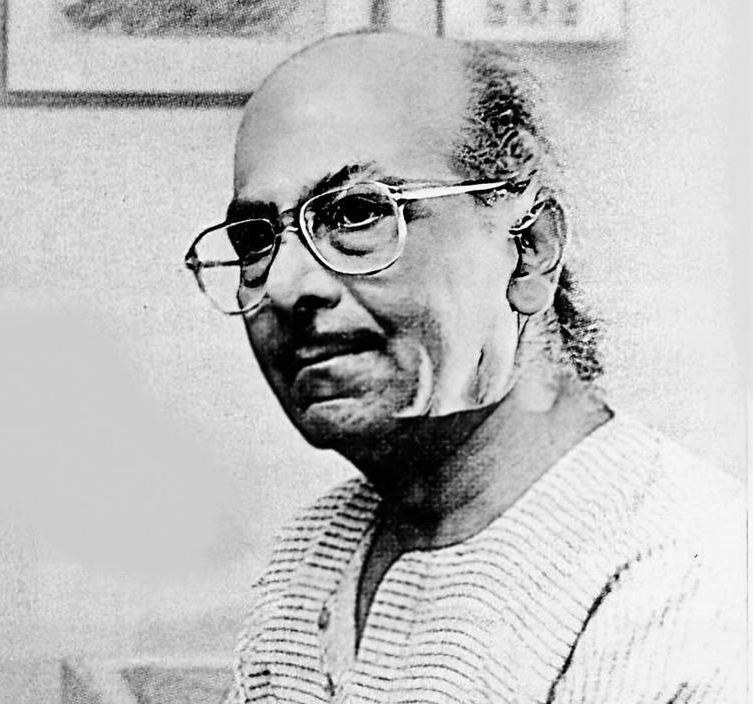
There are composers who write for a language. And then there are composers who write for the human ear — composers for whom a folk tune from a Bengal village, a raga from the classical tradition, and a Mozartian string arrangement are not contradictions but natural companions, waiting to be introduced to each other.
Salil Chowdhury was one of those rare composers. Bengali by birth, shaped by an Assam childhood steeped in Western classical music, politicised by the progressive movement of his times, and eventually beloved by audiences in Hindi, Malayalam, and a dozen other languages - he was, in the truest sense, a composer who belonged to everyone.
A Childhood Shaped by Two Worlds
Salil was born in 1922 in rural West Bengal, but his formative years were spent in the tea gardens of Assam, where his father Dr. Gyanendra Chowdhury worked as a medical officer. It was an unusual setting for a future Indian film composer. His father was a devoted listener of Western classical music, and the home was filled with gramophone recordings of Bach, Mozart, Beethoven, and Tchaikovsky. A neighbouring Irish physician's collection added more.
The young Salil absorbed it all - not as foreign music, but simply as music. He taught himself the flute and developed a lifelong love for Mozart above all others. But this was Assam in the 1930s, and the other world pressing in was one of folk songs, village rhythms, and the political stirrings of a nation moving towards independence. Salil held both worlds lightly, and later in life, he would bring them together in ways that astonished even his peers.
The IPTA Years: Music with a Mission
Before he was a film composer, Salil Chowdhury was a revolutionary - or at least a committed progressive. He became deeply involved with the Indian People's Theatre Association (IPTA), the cultural wing of the Communist Party of India, in the 1940s. This was a movement that believed art could change minds, that songs could move people to action. Salil wrote music for the IPTA that drew on Bengali folk traditions and set them against Western harmonic orchestration — a bold and contentious choice.
In a famous debate at the IPTA's seventh conference, he argued passionately that a new international ideology needed a new musical language - one that drew freely from Indian folk, classical ragas, and Western harmony alike. His opponents felt that workers and peasants would not relate to Western harmonies. Salil disagreed. His subsequent career proved that an audience's capacity for musical feeling is rarely as limited as the theorists assume.
Hindi Cinema's Hidden Revolutionary
When Salil moved to Bombay and entered the Hindi film industry, he carried his convictions with him. His very first Hindi film, Do Bigha Zamin (1953) - a deeply humane story of a poor farmer's struggle - was not entertainment in the conventional sense. It won an international prize at Cannes and became the first film to win the Filmfare Best Movie Award. Its music was spare, earthy, and extraordinarily moving.
What followed was one of the most distinctive bodies of work in Indian film music. Films like Madhumati (1958), Kabuliwala (1957), Maya (1961), Anand (1971), and Rajnigandha (1974) carried the Salil signature: melodies rooted in Indian classical and folk traditions, but dressed in orchestral arrangements of striking sophistication. He was one of the very first Indian film composers to use counterpoint, Western chord progressions, and choral textures not as exotic decoration but as integral musical architecture. When Raj Kapoor said of him, "He can play almost any instrument he lays his hands on - from the tabla to the sarod, from the piano to the piccolo," it was not merely flattery. It described a musician whose comprehensiveness was the source of his originality.
The Kerala Chapter: Chemmeen and Beyond
For readers of this blog, Salil Chowdhury has a particularly special resonance. His arrival in Malayalam cinema — through director Ramu Kariat's landmark 1965 film Chemmeen, based on Thakazhi Sivasankaran Pillai's celebrated novel — was one of those moments when the right composer meets the right story at the right time.
The Chemmeen soundtrack became iconic almost immediately. Manasa Maine Varu, sung by Manna Dey in Malayalam, became one of the most beloved songs ever recorded in the language - an extraordinary achievement for a Bengali composer working in a tongue he did not speak. The song's yearning, its sense of the sea and fate and longing, felt so authentically Keralite that audiences could scarcely believe it came from outside. Salil went on to compose for 27 Malayalam films in total, and his influence on Kerala's film music landscape was lasting and profound.
"Music has to at all times dissolve and evolve… but in my quest for moving forth, I should not forget my tradition." — Salil Chowdhury
✦ Did You Know?
During the 1950s, Salil Chowdhury once disappeared mid-journey between Calcutta and Bombay and spent several months in a remote village - quietly reacquainting himself with rural life and folk music before returning to compose again. It was his way of staying honest.
In 1958, Salil founded the Bombay Youth Choir - the first secular choir in India. At a time when choral music was almost entirely associated with church music in the country, this was a quietly radical act.
Salil Chowdhury composed music in 13 different languages across his career. Yet by many accounts, he could not speak most of them - he worked through transliterations and the emotional arc of the words, trusting melody to carry meaning across linguistic barriers.
♪ Recommended Listening
"Manasa Maine Varu" - Manna Dey from Chemmeen (1965) - The essential Salil-Kerala introduction. A song that sounds like it was born from the sea. On YouTube: search "Manasa Maine Varu Chemmeen."
"Kahin Door Jab Din Dhal Jaye" - Mukesh from Anand (1971) - Perhaps his most beloved Hindi composition, a melody of heartbreaking gentleness. On YouTube: search "Kahin Door Jab Din Dhal Jaye Mukesh."
"Suhana Safar Aur Yeh Mausam Haseen" - Mukesh from Madhumati (1958) - Folk melody, Western orchestration, and pure romance in one song. Search on YouTube.
"Itna Na Mujhse Tu Pyar Badha" - Talat Mahmood from Chhaya (1961) - One of the finest examples of Salil's ability to make orchestral writing feel intimate. On YouTube: search the song title.
Best of Salil Chowdhury - Bengali Songs (Playlist) - To hear where it all began: his Bengali compositions, steeped in folk and classical roots, are where his musical personality is most purely expressed. YouTube has several curated playlists.
A Legacy That Crosses Every Border
Salil Chowdhury passed away on 5 September 1995, leaving behind a body of work that remains startlingly fresh. Partly this is because his music was never purely of its time - it drew on sources old enough to be timeless. And partly it is because his instinct was always to reach across: across languages, across traditions, across the supposed divide between "folk" and "classical," between East and West.
In an industry that often rewarded formula, he kept searching - sometimes literally disappearing into the countryside to find what had been lost. That restlessness, that refusal to settle, is perhaps his most enduring gift to the music he left behind.
For me, Salil Chowdhury is inseparable from a particular song: Poovili Poovili Ponnonamayi. I couldn't have been very old the first time I heard it, but it stayed - the way only certain melodies do when they catch you before you have the words to describe what music does to you. Years later, I would learn about counterpoint and modal harmony and the IPTA and all the rest. But before any of that, there was just that song, and what it felt like to hear it. That, I think, is the truest measure of a composer's greatness - not what the critics say, but what lingers in the quiet corners of a childhood.